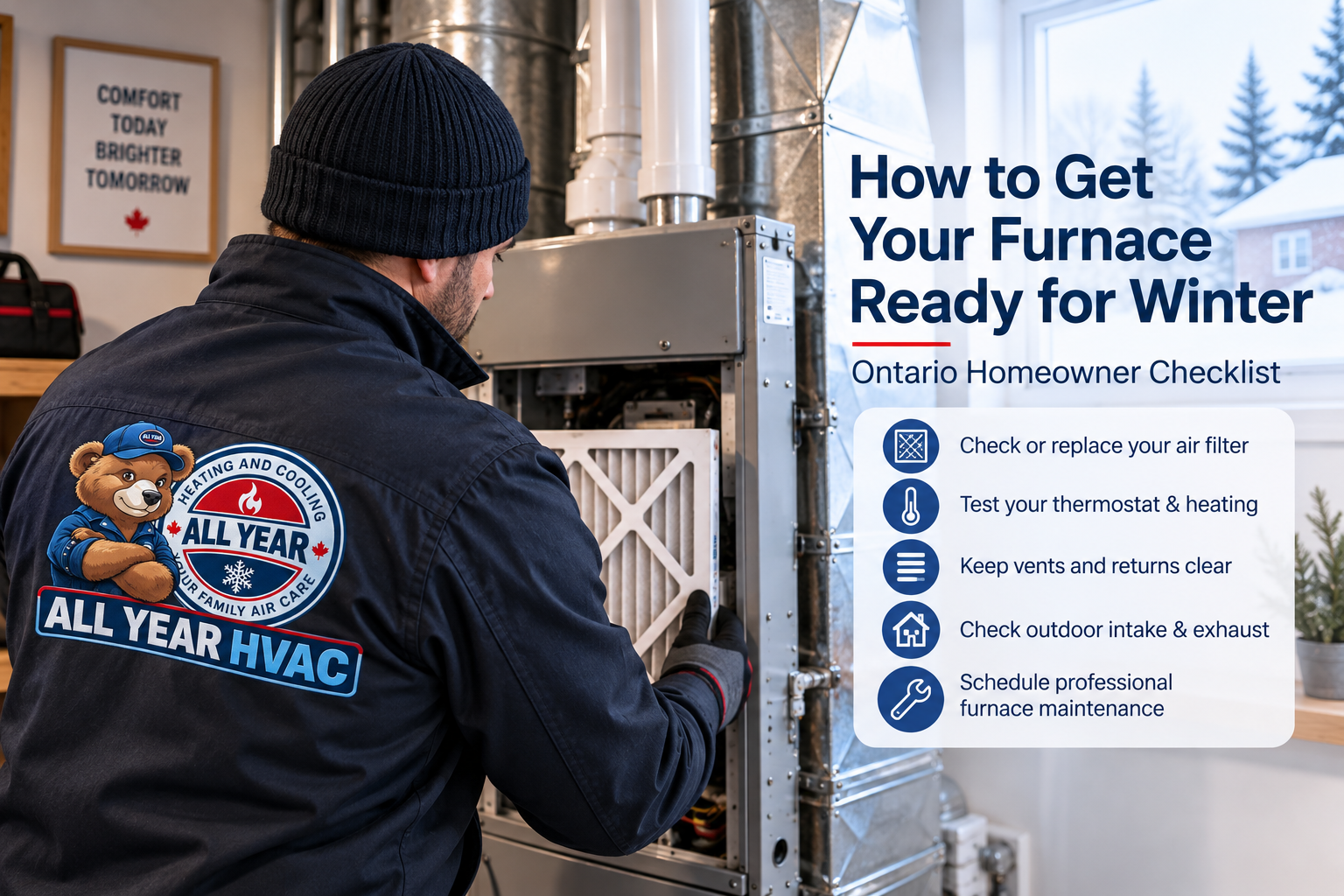
Furnace winter preparation helps Ontario homeowners make sure their heating system is ready before colder weather arrives. When temperatures begin to drop, your furnace can quickly go from sitting idle to running every day. A little preparation before heating season can help identify problems early, improve airflow and comfort, and reduce the chance of discovering a furnace problem on the first truly cold night of the year.
For homeowners in Kitchener, Waterloo, Cambridge and surrounding communities, early fall is a good time to make sure the heating system is ready.
1. Check or Replace Your Furnace Filter
Start with one of the simplest furnace maintenance tasks: check the air filter.
A dirty or heavily restricted filter can reduce airflow and make your heating system work harder. Enbridge Gas recommends changing or cleaning furnace filters regularly and notes that a dirty filter can restrict airflow and increase natural gas use.
How often a filter needs replacement depends on the type of filter, your equipment, pets, renovations, indoor air conditions and how much the system operates. Follow the furnace and filter manufacturer’s recommendations rather than relying on one schedule for every home.
Before winter, inspect the filter and replace it if needed.
2. Test Your Furnace Before the First Cold Night
Don’t wait for freezing temperatures to find out whether your furnace works.
Turn your thermostat to heating mode and raise the temperature setting enough to create a call for heat. Give the system a few minutes to start.
Pay attention to how it operates.
Does the furnace start normally? Is warm air reaching the rooms? Are there unusual noises? Does it repeatedly turn on and off? Are some areas of the home noticeably colder than others?
Testing the furnace early gives you time to address a problem before you depend on it every day.
3. Make Sure Supply Vents and Return Air Grilles Are Clear
Walk through your home and check the supply registers and return-air grilles.
Furniture, rugs, boxes and other household items can unintentionally block airflow. Keeping the system’s vents and returns unobstructed helps conditioned air move through the home as intended.
If certain rooms remain noticeably colder even with unobstructed vents, the problem may need further investigation rather than simply closing or opening registers.
4. Check Your Thermostat
Switch the thermostat from cooling to heating and confirm that it communicates properly with the furnace.
If you have a programmable or smart thermostat, review the schedule before winter. Your heating schedule may be very different from the cooling schedule you used during summer.
If the thermostat is displaying errors, losing power, showing unusual temperature readings or failing to call for heat consistently, have the issue checked before heating season.
5. Look at the Furnace Area
The area surrounding the furnace should remain accessible and free of unnecessary clutter.
Take a visual look around the equipment. Water where it shouldn’t be, corrosion, damaged venting or other obvious changes deserve attention.
Homeowners can perform basic visual checks, but gas furnace servicing should be left to qualified professionals. In Ontario, fuel-burning appliance maintenance must be performed by a TSSA-registered contractor employing certified fuel technicians.
6. Check the Outdoor Intake and Exhaust
High-efficiency furnaces commonly vent through pipes terminating outside the home.
Make sure the terminations are not obstructed by leaves, debris or other materials. Once winter arrives, continue checking them after significant snowfall.
Blocked furnace exhaust or intake terminations can interfere with furnace operation and can create a safety concern. TSSA advises Ontario homeowners to keep fuel-burning appliance vents free of snow and ice.
Never modify the furnace venting yourself. If something looks damaged, incorrectly installed or unusual, have it inspected by a qualified technician.
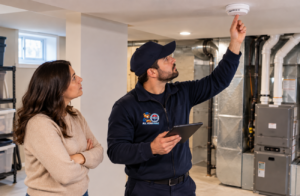
7. Test Your Carbon Monoxide Alarms
Carbon monoxide is colourless and odourless, which makes working CO alarms an essential part of home heating safety.
Test your alarms and check their expiry dates and manufacturer instructions.
Ontario’s updated Fire Code requirements that took effect January 1, 2026 require CO alarms adjacent to each sleeping area and on every storey in homes covered by the requirements, including homes with a fuel-burning appliance, fireplace or attached garage.
TSSA also recommends having fuel-burning appliances inspected and maintained annually by a TSSA-registered contractor.
8. Pay Attention to Warning Signs
A furnace does not always stop working completely before showing signs of a problem.
Consider having the system inspected if you notice:
- Unusual banging, rattling, grinding or other new noises
- Frequent cycling
- Difficulty starting
- Weak airflow
- Uneven heating
- Unusual odours
- Unexpected increases in heating costs
- Repeated furnace error codes
- A furnace that requires frequent repairs
Some issues may need a relatively straightforward repair. Others, particularly on an older furnace with a history of repairs, may raise the question of whether continued repair or furnace replacement makes more financial sense.
9. Schedule Professional Furnace Maintenance
A homeowner can handle basic tasks such as checking the filter, testing the thermostat and keeping vents clear, but professional furnace maintenance goes further.
A qualified technician can inspect the equipment and its operation, identify developing problems and check important safety and performance items before the furnace enters its busiest season.
TSSA recommends annual inspection and maintenance of fuel-burning appliances through a TSSA-registered contractor, while Enbridge Gas similarly recommends a yearly furnace inspection.
Scheduling before the coldest part of winter also gives you more time to deal with a repair if the inspection identifies a problem.
What If Your Furnace Is Getting Older?
Preparing for winter is also a good opportunity to think about the age and condition of your heating equipment.
Age alone doesn’t automatically mean a furnace needs replacement. Consider the bigger picture: repair history, reliability, comfort, efficiency, equipment condition and the cost of an upcoming repair.
If your furnace has become unreliable or you’re facing a significant repair, comparing the repair cost with furnace replacement options can help you make a more informed decision. You can also review our guide to furnace replacement cost in Kitchener-Waterloo to understand what can affect the price of a new furnace.
Furnace Winter Preparation Checklist for Ontario Homeowners
- Inspect or replace the furnace filter if needed
- Test the furnace before cold weather arrives
- Check the thermostat and heating schedule
- Keep supply and return vents unobstructed
- Visually inspect the furnace area
- Check outdoor intake and exhaust terminations
- Test CO alarms and check their expiry dates
- Pay attention to unusual noises, odours or operation
- Schedule annual professional furnace maintenance
A little preparation in the fall can make the transition into an Ontario winter much easier.
Furnace Service in Kitchener-Waterloo
All Year Heating & Cooling Inc. provides furnace maintenance, diagnostics, repairs and furnace replacement for homeowners in Kitchener, Waterloo, Cambridge, Guelph and surrounding communities.
If you’re not sure whether your furnace simply needs seasonal maintenance, requires a repair or is approaching replacement, we can inspect the system and explain what we find before you decide how to proceed.
Get your heating system ready before the cold weather arrives.
Frequently Asked Questions
When should I get my furnace ready for winter?
Early fall is a practical time to test the furnace and schedule maintenance. It gives you time to address problems before the system begins operating heavily during colder weather.
Does a furnace need maintenance every year?
TSSA recommends having fuel-burning appliances inspected and maintained annually through a TSSA-registered contractor.
How often should I change my furnace filter?
There isn’t one replacement interval that is correct for every home. Filter type, system use, pets and indoor conditions all matter. Check the filter regularly and follow the equipment and filter manufacturer’s recommendations.
Can I do furnace maintenance myself?
Homeowners can perform basic tasks such as checking filters, keeping vents clear, checking outdoor terminations and testing thermostats and CO alarms. Gas furnace servicing and fuel-related maintenance should be performed by qualified professionals.
Should I repair or replace an older furnace?
It depends on more than age. Consider the furnace’s condition, repair history, reliability, efficiency and the cost and nature of the current repair. An inspection can provide the information needed to compare the options.