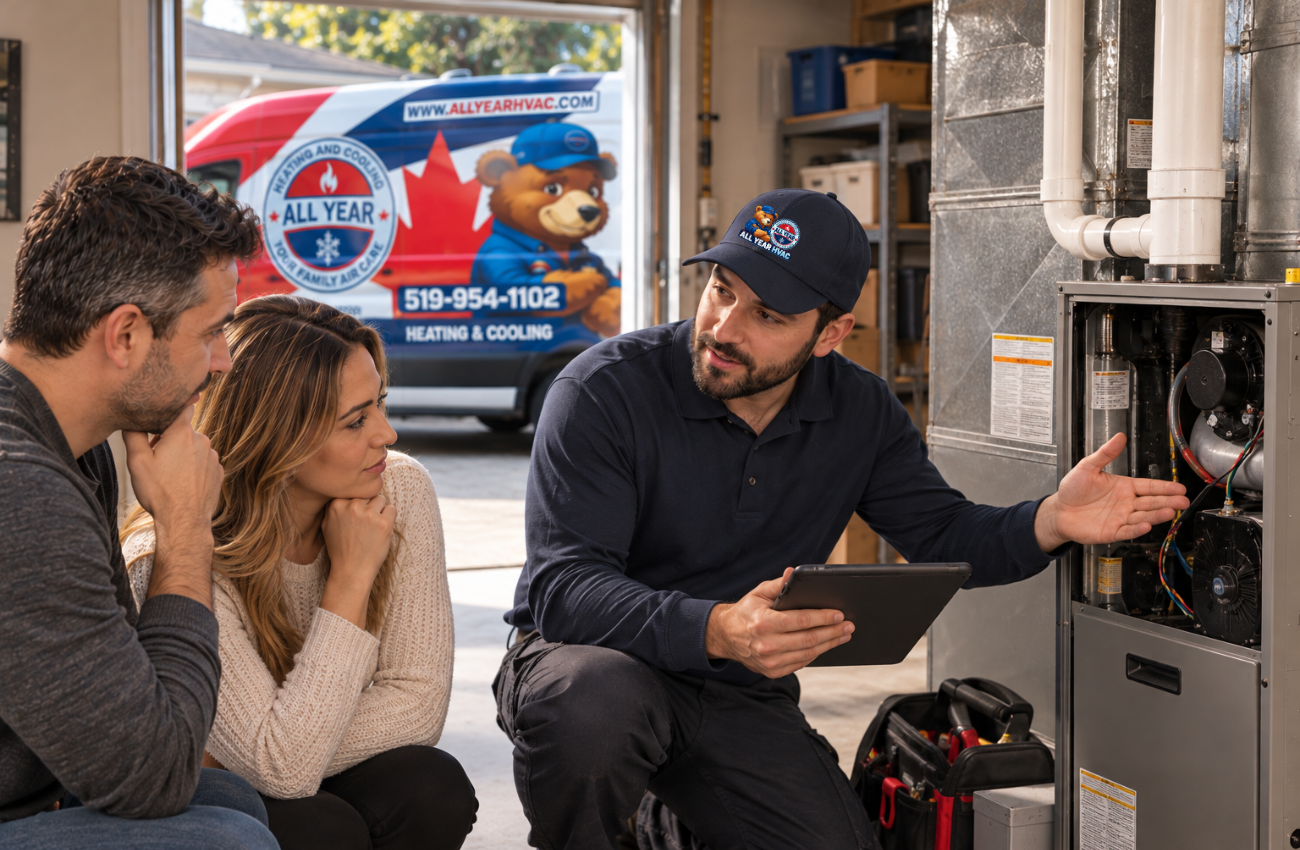
When a furnace starts having problems, the question of furnace repair vs replacement can quickly become important. Is it better to repair the existing furnace, or does replacing it make more sense for your home?
The answer depends on more than the age of the equipment. When considering furnace repair vs replacement, it is important to look at the type and cost of the repair, the furnace’s overall condition, its repair history, reliability, safety, and how well it is heating the home.
A relatively minor repair on an otherwise reliable furnace may make sense. On the other hand, an expensive repair on an older furnace that has already needed repeated service may be a reason to start comparing replacement options.
The goal is not simply to choose the least expensive option today. It is to understand what you are spending money on and whether that decision makes sense for your home over the next several years.
When Does It Make Sense to Repair a Furnace?
A furnace does not need to be replaced simply because something has failed.
If the furnace has generally been reliable and a technician identifies a repairable problem, repairing it may be the practical choice.
- The furnace has otherwise been operating reliably.
- The problem is limited to a repairable component.
- The repair cost is reasonable compared with replacement.
- There have not been repeated breakdowns.
- The furnace is still heating the home properly when operating.
- There are no significant safety concerns with the equipment.
Some heating problems can also have relatively straightforward causes. If your furnace is not heating properly, understanding the actual cause should come before deciding whether the entire system needs replacement.
When Should You Start Considering Furnace Replacement?
Replacement becomes more reasonable to consider when several concerns begin to occur together.
An older furnace that needs one inexpensive repair is very different from an older furnace that has become unreliable and now requires another significant repair.
- Repairs are becoming more frequent.
- A major or expensive component has failed.
- The furnace has become unreliable during cold weather.
- Heating performance or comfort has noticeably declined.
- There are significant safety or combustion concerns.
- Previous repairs have already added up to a substantial amount.
- The furnace has other known problems in addition to the current repair.
The important point is that age alone should not decide whether a furnace is replaced. The condition of the equipment and the nature of the problem matter just as much.
How Much Does the Furnace Repair Cost?
Repair cost is one of the most useful factors when comparing furnace repair vs replacement.
A smaller repair on a furnace that is otherwise in good condition can be very different from spending a substantial amount on an older system that may soon need additional work.
There is also no universal dollar amount at which every furnace should automatically be replaced. The same repair cost can make sense on one furnace and make much less sense on another.
Consider the repair cost together with:
- The age and condition of the furnace
- Previous repair expenses
- The type of component that failed
- Whether other components are showing signs of deterioration
- The reliability of the furnace
- The expected cost of replacement
If replacement is becoming a serious option, knowing what a new system may cost makes the comparison much easier. Our guide to furnace replacement cost in Kitchener-Waterloo explains the major factors that can affect furnace pricing and installation costs in 2026.
How Old Is Your Furnace?
Furnace age is useful information, but it should be considered in context.
Two furnaces of the same age may be in completely different condition. Installation quality, maintenance, operating hours, airflow, previous repairs and the condition of individual components can all affect how a furnace ages.
That is why replacing a furnace based only on its age can be misleading.
Instead, consider age together with the furnace’s current condition, repair history and reliability.
Are You Paying for Furnace Repairs More Often?
One service call does not necessarily indicate that a furnace is nearing the end of its useful life.
Repeated problems deserve a closer look.
If you have paid for several repairs over a relatively short period and another component now needs replacement, consider the total amount being invested in the existing furnace, not just the price of today’s repair.
Service history can be particularly useful here. Knowing what has already been replaced and how frequently the furnace has required attention gives you a much better picture of the system’s overall reliability.
Are There Safety Concerns With the Furnace?
Safety concerns should be evaluated differently from ordinary comfort problems.
Issues involving combustion, venting, gas supply, carbon monoxide or a suspected heat exchanger problem require proper assessment. These are not situations where homeowners should make a repair-versus-replacement decision based only on price.
The Technical Standards and Safety Authority (TSSA) provides Ontario homeowners with information about fuel-burning appliances and carbon monoxide safety.
Homes with fuel-burning appliances should also have properly located and functioning carbon monoxide alarms.
What If the Furnace Still Works but Does Not Heat the Home Well?
A furnace can technically be operating and still have problems with comfort or performance.
Homeowners may notice:
- Some rooms are consistently colder than others.
- The furnace runs frequently without maintaining comfortable temperatures.
- Airflow from the registers seems weak.
- The system has become noticeably louder.
- Heating feels less consistent than it did previously.
These symptoms do not automatically mean the furnace needs replacement. Airflow restrictions, controls, ductwork, maintenance issues and other system problems can also affect performance.
A proper diagnosis helps separate a repairable problem from a larger equipment issue.
Does Furnace Efficiency Matter When Deciding Whether to Replace?
Efficiency can be part of the decision, particularly when an older furnace already requires a significant repair.
However, a newer furnace having a higher efficiency rating does not automatically mean that replacing a working furnace will provide enough savings to justify the cost.
The condition of the existing equipment, the required repair, the home’s heating needs, installation costs and expected future use should all be considered.
In other words, efficiency is one factor, not the entire decision.
What If the Existing Furnace Is the Wrong Size?
If replacement is being considered, it is also an opportunity to determine whether the existing furnace is properly sized for the home.
Simply installing a new furnace with the same BTU rating as the old equipment is not always the best approach.
Home size matters, but proper furnace sizing can also depend on insulation, windows, air leakage, construction, layout and the home’s heating load.
Would a New Furnace Improve Comfort?
Replacement may also provide an opportunity to consider equipment features that affect comfort.
For example, single-stage, two-stage and modulating furnaces differ in how they control heating output. Furnace blower technology affects airflow through the home and can also influence comfort and noise.
These are two different characteristics of a furnace. A variable-speed blower, for example, describes blower operation; it is not another heating stage.
Is the Cheapest Furnace Repair or Replacement Quote Always the Best Choice?
Price matters, but it should be considered together with what is actually included.
For a repair, homeowners should understand what failed, what is being replaced and whether there are other known concerns with the furnace.
For replacement, the equipment is only part of the job. Proper sizing, venting, gas piping, electrical and control wiring, condensate drainage, duct transitions, startup and testing can all affect the quality of the finished installation.
If replacement is the direction you choose, you can review our furnace replacement options for Kitchener-Waterloo and surrounding communities.
Furnace Repair vs Replacement: What Should You Consider?
Before making the decision, look at the furnace as a complete system.
- What exactly has failed?
- How much will the repair cost?
- How old is the furnace?
- Has it needed other repairs recently?
- Is the furnace still reliable?
- Are there any safety concerns?
- Is it heating the home properly?
- Is the existing furnace properly sized?
- What would a suitable replacement cost?
- How long do you expect to remain in the home?
There is no single formula that gives the right answer for every homeowner.
For some systems, a repair can provide years of additional service. For others, another expensive repair may mean it is worth comparing the cost and benefits of replacement before investing more money in the existing furnace.
Get Help Deciding Whether to Repair or Replace Your Furnace
If you are unsure whether to repair or replace your furnace, All Year Heating & Cooling can inspect the system, identify the problem and explain the available options.
When a repair makes sense, you can make that decision with a clearer understanding of the furnace’s condition. When replacement is worth considering, we can discuss appropriate equipment and what would be involved in installing it properly in your home.
For homeowners in Kitchener, Waterloo, Cambridge, Guelph and surrounding communities, our goal is to give you enough information to make an informed decision about your heating system.
Financing Options for Furnace Replacement
Financing options are available for qualifying homeowners. Explore financing options or contact All Year Heating & Cooling to learn about current financing options and available promotions.