When comparing furnace blower motor types, homeowners may come across terms such as PSC, multi-speed ECM and variable-speed ECM. While much of the attention when choosing a furnace goes to efficiency ratings, furnace size, brand and whether the furnace is single-stage, two-stage or modulating, blower motor technology can also have a noticeable effect on airflow, comfort, noise and electricity use.
The blower motor powers the fan that moves heated air through the ductwork and into the rooms of your home. It also plays an important role during air conditioning season because the same blower moves cooled air through the duct system when a central air conditioner is operating.
Depending on the furnace, the blower may use PSC, multi-speed ECM or variable-speed ECM technology. These motors do not all operate in the same way, and understanding the differences can help homeowners make a more informed decision when repairing or replacing a furnace.
For homeowners in Kitchener, Waterloo, Cambridge, Guelph and surrounding communities, here is what you should know about the different types of furnace blower motors.
What Does a Furnace Blower Motor Do?
A furnace creates heat, but that heat still needs to be distributed throughout the home.
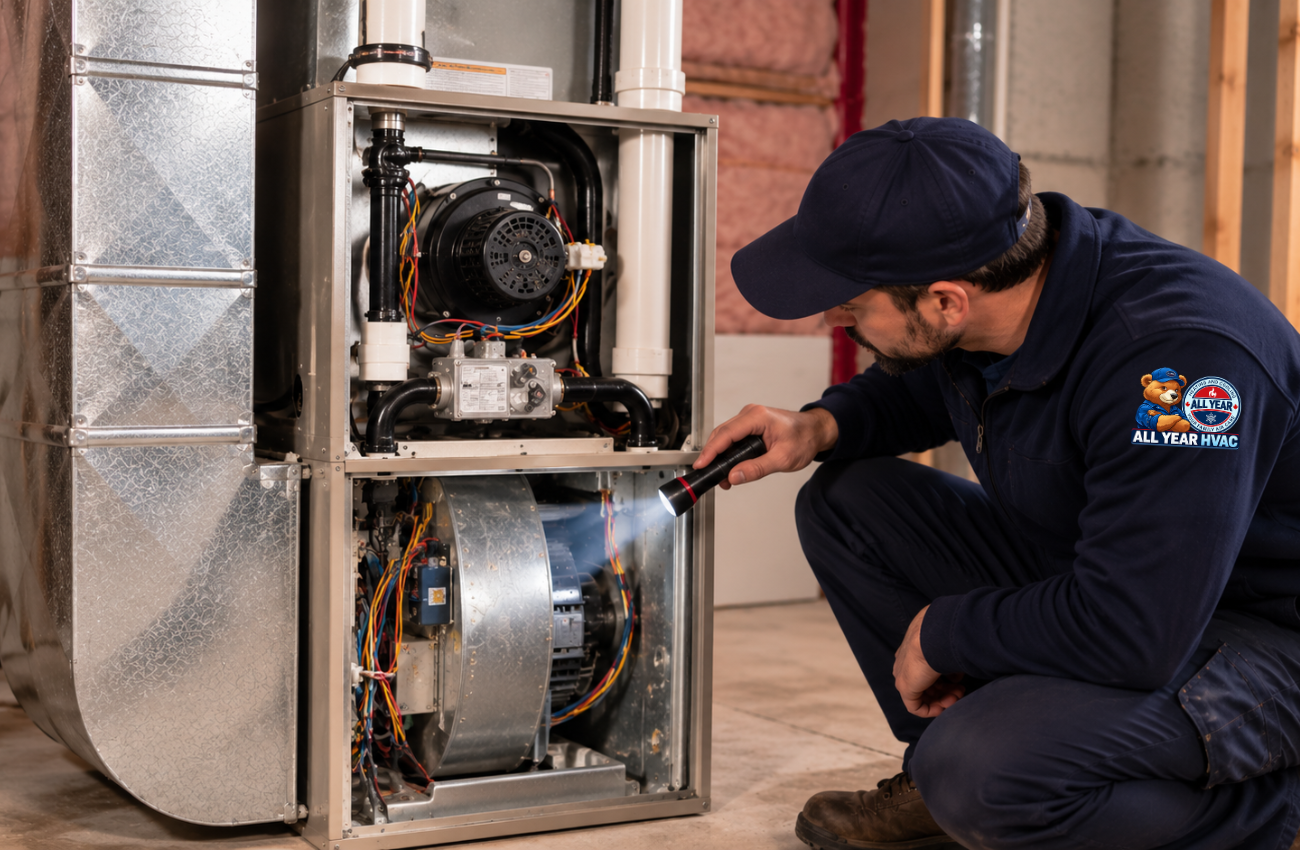
The blower assembly contains a motor that turns the blower wheel, often called a squirrel-cage fan. As the blower operates, it moves air through the furnace and duct system.
During a typical heating cycle:
- The thermostat calls for heat.
- The furnace begins its ignition and heating sequence.
- The burners heat the heat exchanger.
- After the appropriate delay, the blower starts.
- Air passes across the heat exchanger and is distributed through the supply ducts.
- When the heating cycle ends, the blower typically continues running briefly to move remaining heat through the system.
The blower is also used when the air conditioner operates. Indoor air passes across the evaporator coil before the blower distributes the cooled air through the home.
Because the blower operates during both heating and cooling, its design can affect year-round HVAC performance.
What Are the Main Types of Furnace Blower Motors?
Residential furnaces can use several different blower motor designs. Three terms homeowners commonly encounter are:
- PSC blower motor
- Multi-speed ECM blower motor
- Variable-speed ECM blower motor
PSC stands for Permanent Split Capacitor, while ECM stands for Electronically Commutated Motor.
These technologies differ in how the motor is controlled and how precisely the furnace can manage airflow.
What Is a PSC Furnace Blower Motor?
PSC motors are an older, relatively simple blower motor technology that has been widely used in residential HVAC equipment.
A PSC motor generally operates using predetermined speed taps. During installation or service, the appropriate speed can be selected for different operating modes, such as heating or cooling.
The important point is that having several selectable speed taps does not make a PSC motor a true variable-speed motor.
Advantages of PSC Blower Motors
PSC motors have traditionally offered several practical advantages:
- Relatively simple design
- Familiar technology for HVAC technicians
- Straightforward operation
- Often lower initial equipment or replacement cost compared with more advanced motor technologies
For an older furnace that is otherwise operating properly, a PSC blower motor can continue doing its job effectively when the system is correctly set up and maintained.
Limitations of PSC Blower Motors
Compared with modern ECM technology, PSC motors generally offer less sophisticated airflow control and can use more electricity to operate.
They also do not provide the same ability as a true variable-speed ECM system to continuously adjust blower operation to changing airflow demands.
For homeowners who run the furnace fan for extended periods for continuous circulation, blower electrical consumption can become more relevant because the motor may operate for many hours.
What Is a Multi-Speed ECM Blower Motor?
A multi-speed ECM combines electronically commutated motor technology with several programmed operating speeds or airflow settings.
This is an important distinction: multi-speed ECM does not automatically mean variable-speed ECM.
A multi-speed ECM may offer several defined operating selections, allowing the furnace to use different airflow settings depending on heating, cooling or continuous-fan requirements.
Compared with traditional PSC technology, ECM motors are designed for more efficient electrical operation.
Goodman, for example, currently offers furnace models using a multi-speed ECM blower motor with continuous fan speed, demonstrating that multi-speed ECM remains distinct from its variable-speed ECM products.
Why Are Multi-Speed ECM Motors Common?
Multi-speed ECM technology can provide a useful middle ground between older PSC technology and more sophisticated variable-speed systems.
Depending on the furnace design, potential benefits can include:
- Lower blower electricity consumption compared with older PSC technology
- Multiple airflow settings
- Efficient continuous-fan operation
- Improved control flexibility
- Compatibility with modern furnace designs
However, the exact operation depends on the furnace model and its controls. The term “ECM” alone should not be interpreted to mean that every ECM-equipped furnace has full variable-speed airflow control.
What Is a Variable-Speed ECM Blower Motor?
A variable-speed ECM is a more advanced blower motor and control system capable of adjusting its operation across a broader range rather than simply switching between a few predetermined speeds.
The furnace control system determines the required blower operation based on the equipment design, operating mode and demand.
This allows airflow to ramp up or down more gradually in compatible systems. As a result, variable-speed blower technology can provide more precise control of heated or cooled airflow compared with simpler fixed or predetermined-speed blower designs.
Potential Benefits of Variable-Speed ECM
Depending on the furnace and overall HVAC system, variable-speed blower technology may provide:
- More precise airflow control
- Smoother changes in airflow
- Quieter operation at lower airflow levels
- Lower blower electricity consumption than traditional PSC technology
- More consistent air circulation
- Improved comfort
- Better support for compatible multi-stage heating and cooling equipment
Some variable-speed systems are designed to maintain more consistent airflow as operating conditions change. However, their ability to do so still depends on the equipment design, controls and overall duct system.
That does not mean a variable-speed motor can correct every ductwork problem. Excessive static pressure caused by restrictive ductwork, a dirty filter, closed registers or other airflow restrictions should still be identified and corrected where appropriate.
PSC vs. Multi-Speed ECM vs. Variable-Speed ECM: What’s the Difference?
The simplest way to understand the three technologies is:
| Blower Technology | How It Operates | Airflow Control | Typical Electrical Efficiency | Comfort Capability |
|---|---|---|---|---|
| PSC | Uses selected fixed speed taps | Basic | Lower than modern ECM technology | Basic |
| Multi-Speed ECM | Uses electronically controlled predetermined speeds/settings | Better | Higher than traditional PSC | Improved |
| Variable-Speed ECM | Can adjust operation across a broader operating range | Most precise of these three | High | Most flexible |
The exact performance still depends on the furnace model, control system, ductwork and installation.
For that reason, homeowners should not choose a furnace based only on the words “ECM” or “variable speed.” The complete system needs to be considered.
Is a Variable-Speed Blower the Same as a Two-Stage Furnace?
No. This is one of the most important distinctions when comparing furnaces.
Furnace staging describes heat output. Blower technology describes airflow.
A single-stage furnace has one main heating output when the burners are operating.
A two-stage furnace can operate at a lower and higher heating stage.
A modulating furnace can adjust burner output through a broader range, depending on the equipment design.
PSC, multi-speed ECM and variable-speed ECM describe the technology used to move air through the system.
This means “two-stage” and “variable-speed” are not competing descriptions. A furnace can be both two-stage and variable-speed.
For example, YORK offers furnace configurations that combine two-stage heating with a variable-speed ECM blower.
If you want to understand the heating side of the furnace rather than the blower, read our guide to single-stage, two-stage and modulating furnaces.
Does the Blower Motor Affect Home Comfort?
It can.
Home comfort depends on many factors, including furnace sizing, duct design, insulation, thermostat location, airflow balancing and the heating characteristics of the house.
The blower is one part of that system.
A more advanced blower can allow the equipment to deliver airflow more gradually and more precisely. In compatible systems, this can help reduce abrupt changes in airflow and provide more consistent circulation.
However, installing advanced equipment does not compensate for an incorrectly sized furnace or a poorly designed duct system.
If you are replacing your heating equipment, proper furnace sizing should be considered along with blower technology.
Does a Variable-Speed Blower Make a Furnace Quieter?
It can contribute to quieter operation, particularly when the blower is able to operate at lower airflow levels instead of immediately operating at higher output.
Gradual ramping can also make the transition into and out of a heating or cooling cycle less noticeable.
But blower technology is only one source of HVAC sound.
Noise can also come from:
- Ductwork
- Return-air restrictions
- Supply registers
- Inducer motors
- Bearings
- Blower wheels
- Loose panels
- Improper airflow
- Other mechanical components
If your existing furnace has suddenly become noisy, that should not automatically be blamed on the type of blower motor. Our guide to furnace noises and what they may mean covers several common causes.
Does the Furnace Blower Affect Electricity Use?
Yes.
The blower motor uses electricity whenever it operates, whether the system is heating, cooling or simply circulating air.
ECM blower motors are generally designed for more electrically efficient operation than traditional PSC motors. However, the actual electricity savings in a particular home cannot be determined from motor type alone.
Electricity consumption will depend on factors such as:
- How many hours the blower operates
- Required airflow
- Duct-system resistance
- Heating and cooling runtime
- Motor and control design
- System setup
- Whether continuous fan circulation is used
For this reason, it would be misleading to promise a specific percentage of electricity savings simply because a furnace uses an ECM blower.
Why Is Proper Airflow Important?
A furnace blower is not simply intended to move as much air as possible.
The HVAC system needs the correct airflow for the equipment and application.
Too little airflow can contribute to operating problems, while excessive airflow may create comfort or noise issues. Proper airflow is also important when the blower is being used with a central air conditioner or heat pump.
Airflow can be affected by several things, including:
- Dirty or overly restrictive filters
- Blocked return-air pathways
- Closed or obstructed registers
- Duct sizing
- Blower setup
- Evaporator coil condition
- System modifications
- Overall static pressure
A more advanced blower motor does not eliminate the need for a properly designed and maintained air-distribution system.
One of the simplest things homeowners can do is keep up with furnace filter replacement and avoid operating the system with a severely restricted filter.
What Are Common Signs of a Furnace Blower Problem?
A blower-related problem may show up in several ways.
Possible symptoms include:
- Little or no airflow from supply registers
- Weak airflow
- Blower not starting
- Blower running unexpectedly
- Unusual humming, squealing, scraping or grinding sounds
- Intermittent blower operation
- Furnace shutting down during operation
- Heating or cooling performance problems
However, these symptoms do not prove that the blower motor itself has failed.
A problem may instead involve the control board, capacitor on applicable PSC systems, wiring, thermostat/control signal, blower wheel, airflow restriction or another component.
That is why proper diagnosis matters before replacing parts.
If your furnace is operating but not heating the home properly, the complete system should be assessed rather than focusing on one component alone.
Can a Dirty Furnace Filter Damage the Blower Motor?
A heavily restricted filter can increase resistance to airflow and create operating conditions the HVAC system was not designed to handle.
The effect on the blower depends on the motor type and system design, but a dirty filter can contribute to poor airflow, comfort problems and unnecessary stress on HVAC equipment.
Changing filters at the appropriate interval is therefore not just about indoor air quality. It is also part of maintaining proper system airflow.
If you are unsure how often your filter should be changed, see our furnace filter guide.
Does Blower Technology Affect Furnace Replacement Cost?
It can.
Furnaces using more advanced blower motors and controls are often positioned differently within a manufacturer’s product lineup than simpler models.
However, blower technology is only one factor affecting furnace price.
Replacement cost can also depend on:
- Furnace size
- Heating stages
- Efficiency level
- Equipment model
- Venting requirements
- Gas piping
- Electrical and control requirements
- Sheet-metal transitions
- Thermostat requirements
- Installation conditions
- Ductwork modifications
Our detailed guide explains the other factors that can affect furnace replacement cost in Kitchener-Waterloo.
Which Furnace Blower Motor Is Better for My Home?
There is no single blower technology that every homeowner needs.
The appropriate choice depends on the furnace, HVAC system, comfort expectations, budget and how the equipment will be used.
A simpler system may be perfectly appropriate for one home, while another homeowner may value quieter operation, more precise airflow or more advanced system control.
The blower should therefore be considered as part of the complete furnace system, not as an isolated specification.
When comparing replacement equipment, consider:
- Proper furnace sizing
- Heating stages
- Blower motor technology
- Ductwork and airflow
- Cooling or heat-pump compatibility
- Controls and thermostat
- Installation quality
- Equipment cost
- Long-term serviceability
If your existing furnace is older or facing a significant repair, our furnace repair vs. replacement guide can help explain the broader factors to consider.
Furnace Blower Motor Service in Kitchener-Waterloo, Cambridge and Guelph
All Year Heating & Cooling Inc. provides furnace diagnostics, repair, maintenance and replacement for homeowners throughout Kitchener, Waterloo, Cambridge, Guelph and surrounding communities.
Our service area also includes Elmira, St. Jacobs, Elora, Fergus, New Hamburg, Baden, Ayr and nearby communities.
If your furnace blower is making unusual noises, producing weak airflow, failing to start or you are comparing furnace options with different blower technologies, the system can be inspected to determine what is actually happening before repair or replacement options are considered.
If you are planning to replace an older furnace and want to compare equipment options:
Request a Free Furnace Estimate
You can also review our furnace replacement and installation options to learn more.
Financing options are available for qualifying homeowners. Contact All Year Heating & Cooling to learn about current financing options and available promotions.
Frequently Asked Questions About Furnace Blower Motors
What is the difference between a PSC and ECM furnace motor?
A PSC motor is a traditional furnace blower motor design that generally operates using selected speed taps. An ECM is electronically controlled and is designed for more efficient motor operation. ECM motors may be multi-speed or variable-speed depending on the furnace and control design.
Is a multi-speed ECM the same as a variable-speed ECM?
No. A multi-speed ECM generally operates at several predetermined settings, while a true variable-speed ECM can adjust its operation across a broader range according to the furnace’s controls and operating requirements.
Is a variable-speed furnace the same as a two-stage furnace?
Not necessarily. Two-stage describes the furnace’s heating output, while variable-speed describes blower operation. A furnace can have a two-stage gas valve and a variable-speed ECM blower at the same time.
Does an ECM blower motor save electricity?
ECM motors are generally more electrically efficient than traditional PSC technology, but the actual electricity savings in a home depend on runtime, airflow requirements, duct-system resistance, system configuration and how the blower is used.
Why is my furnace blower running but there is little airflow?
Possible causes include a dirty filter, duct restriction, blower setup problem, dirty coil, blower-wheel issue or another mechanical or control problem. Weak airflow does not automatically mean the blower motor has failed.
Should I choose a furnace based on the blower motor?
Blower technology is worth considering, but it should not be the only factor. Furnace sizing, heating stages, ductwork, efficiency, cooling-system compatibility, controls and installation quality all contribute to the performance of the complete HVAC system.