A rental property gas inspection in Waterloo can be an important part of meeting the City’s rental licensing requirements. For landlords, maintaining safe heating equipment and fuel-burning appliances is also an important part of looking after a rental property and its occupants.
For landlords in the City of Waterloo, this is especially important because updated rental licensing requirements that took effect on July 1, 2026 include a gas or oil heating appliance inspection for applicable rental licence applications and renewals.
If your Waterloo rental property has a gas furnace, water heater, gas fireplace, gas stove or other gas-fuelled heating appliance, understanding this requirement can help you prepare for your rental licence and avoid last-minute surprises.
At All Year Heating & Cooling Inc., we work with residential heating and gas equipment throughout Waterloo and surrounding communities. This guide explains what Waterloo landlords should know about the inspection requirement, Form E and the broader importance of gas-appliance safety in a rental property.
What Is the Waterloo Rental Property Gas Appliance Inspection?
The City of Waterloo requires a Gas or Oil Fuelled Appliance Inspection – Form E as part of its rental housing licensing process in applicable cases.
According to the City, the inspection form must be completed by a licensed gas fitter or, for oil equipment, an appropriately licensed oil burner technician.
The current City requirements state that the inspection must be dated within the previous 12 months. For new applications submitted on or after July 1, 2026, the requirement applies at application and every other year afterward. The City also identifies specific renewal periods beginning in 2026–2027 for the updated requirement.
Because municipal requirements and forms can change over time, landlords should always confirm the current requirements directly through the City of Waterloo residential rental licensing page.
What Is Form E?
Form E is the City of Waterloo’s Gas or Oil Fuelled Appliance Inspection Form.
The form records information about the rental property, heating contractor and licensed technician completing the inspection. The technician is required to certify the applicable gas and/or oil-fuelled appliances in the rental unit as part of the City’s licensing documentation.
The City’s current Form E specifically identifies examples including:
- Furnace
- Water heater
- Gas fireplace
- Gas stove
Other applicable gas or oil-fuelled appliances may also need to be considered.
A separate Form E is required for each applicable rental unit at the property. Landlords can access the current Form E and requirements through the City of Waterloo’s residential rental licensing page.
Who Can Complete Form E in Waterloo?
This is not a form that a landlord completes independently.
The City’s current Form E states that it must be completed by a Class 1 or Class 2 Gas Fitter or Oil Burner Technician, depending on the equipment being inspected. The form also includes fields for the heating contractor’s information and TSSA registration number.
If your rental property uses natural gas equipment, arranging the inspection through a properly qualified gas contractor is therefore an important part of preparing the required documentation.
Which Gas Appliances May Be Included in the Inspection?
Many homes have more than one gas appliance.
A Waterloo rental property could potentially contain:
- A gas furnace
- A natural gas water heater
- A gas fireplace
- A gas stove or range
- Other gas-fuelled equipment
This is important because a landlord may think only about the furnace when arranging an inspection, while other fuel-burning appliances in the rental unit may also be relevant.
The current Form E declaration refers to all gas and/or oil-fuelled heating appliances in the unit and specifically gives furnaces, water heaters, gas fireplaces and gas stoves as examples.
What Happens During a Gas Appliance Inspection?
The purpose of an inspection is not simply to look at the outside of the furnace and sign a form.
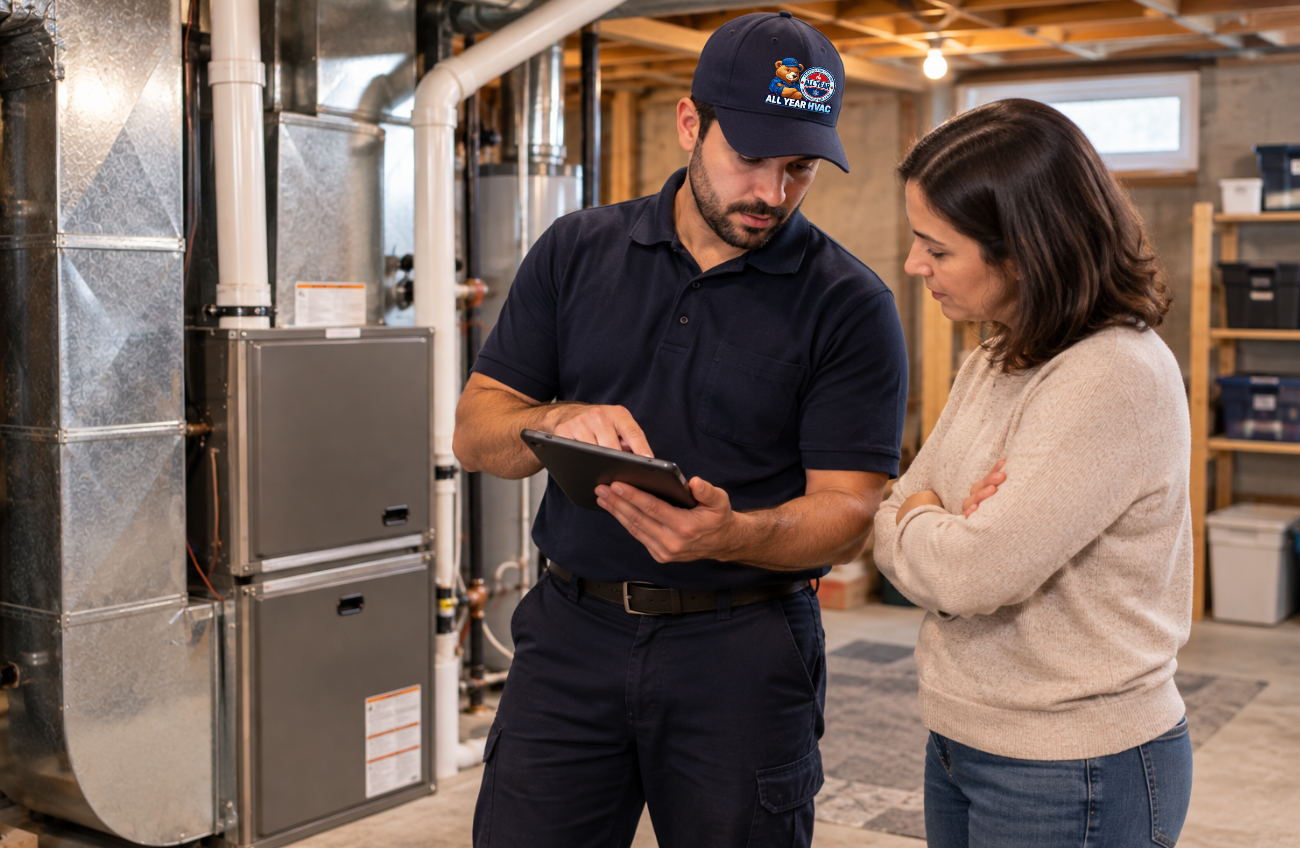
A qualified gas technician needs to assess the applicable equipment and determine whether conditions requiring attention are present.
Depending on the equipment and installation, an inspection may involve reviewing items such as:
- General appliance condition
- Gas piping and accessible connections
- Venting
- Combustion-related components and operation
- Furnace operation
- Applicable safety controls
- Water-heating equipment
- Gas fireplaces or other applicable appliances
- Visible installation or safety concerns
The exact inspection will depend on the appliances installed and the conditions found at the property.
If a problem is identified, additional diagnosis, repair or corrective work may be required before the equipment can be considered satisfactory. An inspection should not be treated as a guarantee that an older appliance will never develop a future problem.
What If a Problem Is Found During the Inspection?
Finding a problem does not automatically mean the furnace or another appliance needs to be replaced.
Some issues may be repairable. Others may involve venting, gas piping, controls, appliance condition or another part of the installation.
The appropriate next step depends on what is actually found.
For an older furnace facing a significant problem, landlords may also need to consider whether repair remains practical. Our guide to furnace repair vs. replacement explains some of the factors that can help with that decision.
If replacement becomes necessary, landlords can also review our furnace replacement and installation options.
Does Every Waterloo Rental Property Need Form E?
Landlords should confirm the requirements that apply to their particular licence and property directly with the City of Waterloo.
Under the City’s current licensing information, applicants are directed to provide Form E for the gas or oil heating appliance inspection or Form F, a declaration that there are no gas or oil-fuelled appliances, as applicable.
The timing also depends on whether the application is new or a renewal and where it falls within the City’s implementation schedule.
For that reason, rather than relying on an old copy of a form or information saved from a previous licence year, check the City of Waterloo’s current rental licensing requirements before submitting your application.
Why We Do Not Link Directly to a Copy of Form E
Municipal forms can be revised or replaced.
Instead of downloading an old copy of Form E from a third-party website or relying on a previously saved link, landlords should access the current form through the City of Waterloo’s official rental licensing page.
This helps ensure you are working with the version currently provided by the City.
What About Carbon Monoxide Alarms?
Gas-appliance inspection and carbon monoxide alarm requirements are related to home safety, but they are not the same requirement.
Carbon monoxide, or CO, can be produced when fuels such as natural gas, propane, heating oil or wood do not burn completely.
Ontario’s carbon monoxide alarm requirements changed effective January 1, 2026. For houses to which the requirements apply, CO alarms are required adjacent to sleeping areas and, under the updated requirements, on every storey, including storeys without sleeping areas.
Ontario also places specific responsibilities on landlords. In rental suites, landlords are responsible for installing and maintaining required CO alarms, testing them at prescribed times—including annually and when tenancy changes—and providing tenants with the alarm manufacturer’s maintenance instructions.
Landlords should review the current Ontario carbon monoxide safety requirements for the rules that apply to their property.
Is a CO Alarm a Substitute for a Gas Appliance Inspection?
No.
A carbon monoxide alarm is an important life-safety device, but it does not replace proper inspection, maintenance or diagnosis of fuel-burning equipment.
Similarly, having a furnace inspected does not eliminate the requirement to have properly installed and functioning CO alarms where required.
These are different layers of home safety.
If a CO alarm activates, occupants should follow the appropriate emergency and safety instructions rather than assuming the alarm is faulty or simply resetting it.
What About Smoke Alarms in a Rental Property?
Smoke alarms are another separate requirement.
Ontario’s Fire Code includes requirements for smoke alarms in residential occupancies, including requirements related to sleeping areas and storeys of a dwelling.
Landlords should not assume that completing a gas inspection or having working CO alarms satisfies their smoke-alarm responsibilities.
Because fire-safety requirements can depend on the property and its configuration, landlords should confirm the current requirements applicable to their rental property rather than relying on general advice.
What If My Rental Property Is Outside Waterloo?
Form E is a City of Waterloo rental licensing document.
A landlord with a property in Kitchener, Cambridge, Guelph, Elmira, Fergus or another municipality should not assume that Waterloo’s Form E requirement applies to that property.
Municipal licensing requirements can differ.
However, fuel-burning appliance safety remains important regardless of whether a municipality uses Waterloo’s Form E.
Ontario’s Fire Code requirements concerning carbon monoxide alarms also extend beyond Waterloo. Building owners and landlords have responsibilities under the applicable provincial rules. Ontario
A landlord outside Waterloo may therefore still choose to have a furnace or other gas appliance professionally inspected or serviced, particularly when there are concerns about equipment operation, age, venting, unusual noises, poor heating or other potential safety issues.
Should Landlords Have Furnaces Maintained Regularly?
Rental licensing paperwork should not be the only time a heating system receives attention.
Regular furnace maintenance can help identify developing problems, verify operation and provide an opportunity to address issues before they become larger repairs.
This is especially useful in rental properties, where the person responsible for maintaining the equipment may not be the person living with it every day.
Our guide to annual furnace maintenance explains what homeowners and landlords should know about regular furnace service.
Landlords with older equipment may also find our guide on how long furnaces typically last in Ontario helpful when planning future repairs or replacement.
Rental Property Gas Inspections in Waterloo
All Year Heating & Cooling Inc. provides residential HVAC and gas services for homeowners and property owners in Waterloo and surrounding communities.
If you need a gas-appliance inspection for a Waterloo rental property, we can inspect the applicable residential gas equipment and advise you if a condition requiring attention is identified.
When booking, let us know that the appointment is for a Waterloo rental property / Form E inspection so the purpose of the visit is clear before the appointment.
Book a Rental Property Gas Inspection
Contact All Year Heating & Cooling
If an older furnace needs replacement after an inspection or diagnosis:
Request a Free Furnace Estimate
Get a Free Furnace Replacement Estimate
We serve Waterloo, Kitchener, Cambridge, Guelph, Elmira, St. Jacobs, Elora, Fergus, New Hamburg, Baden, Ayr and nearby communities.
Frequently Asked Questions About Waterloo Rental Property Gas Inspections
What is Form E in Waterloo?
Form E is the City of Waterloo’s Gas or Oil Fuelled Appliance Inspection Form used as part of the City’s rental housing licensing requirements. The current form must be completed by an appropriately licensed gas fitter or oil burner technician, depending on the equipment.
How often is Form E required?
Under the City’s current requirements, Form E must be dated within the previous 12 months when required. For new applications submitted on or after July 1, 2026, the City specifies the inspection at application and every other year afterward. Specific renewal dates are also included in the City’s implementation schedule. Landlords should verify the current schedule when renewing their licence.
Does the inspection only cover the furnace?
Not necessarily. The City’s current Form E refers to all applicable gas and/or oil-fuelled heating appliances and specifically lists examples such as furnaces, water heaters, gas fireplaces and gas stoves.
Can a Landlord Fill Out Form E?
No. The City’s current Form E requires completion by a Class 1 or Class 2 Gas Fitter or Oil Burner Technician.
Is Form E required in Kitchener or Cambridge?
Form E discussed in this article is a City of Waterloo rental licensing document. Do not assume Waterloo’s municipal form applies to a rental property in another municipality. Check the requirements of the municipality where the property is located.
Does having a CO alarm replace the gas inspection?
No. CO alarms and gas-appliance inspections serve different purposes. A required CO alarm does not replace professional assessment of fuel-burning equipment, and an appliance inspection does not replace required CO alarms. Ontario’s current CO rules should be followed independently. Ontario